Happy New Year Greetings to one and all! And thank you to Harpo. Definitions are underlined in the clues.
Across
5. Scottish author managed by family (6)
RANKIN : RAN(managed, say, an organisation) plus(by) KIN(one’s family and relations).
Answer: .., Ian, Scottish crime writer.
6. Engineer’s ancient letter kept by British Library (6)
BRUNEL : RUNE(a letter of an ancient Germanic alphabet) contained in(kept by) BL(abbrev. for the British Library).
Answer: …, Isambard Kingdom, English civil and mechanical engineer.
9. Fancies girl among dozens? Not half (6)
ENJOYS : JOY(a girl’s name) contained in(among) “dozens” minus its 1st 3 out of 6 letters(Not half).
10. Plastered punk date abandoned (6,2)
TANKED UP : Anagram of(… abandoned) PUNK DATE.
Defn: …/drunk.
11. Communicate unfinished story by king (4)
TALK : Last letter deleted from(…unfinished) “tale”(a fictitious or true story) plus(by) K(abbrev. for “king”, in chess notation).
12. Greek scientist heads crime broadcast (10)
ARCHIMEDES : Anagram of(… broadcast) HEADS CRIME.
Answer: … of Syracuse, Ancient Greek genius of “Eureka!” fame.
13. Eccentric name that started up old saloon? (11)
CRANKHANDLE : CRANK(an eccentric/a slightly strange fellow) + HANDLE(an informal term for “name”/nickname).
Defn: … car.

18. Potter surnamed so unusually (4,6)
MESS AROUND : Anagram of(… unusually) SURNAMED SO.
Defn: …/to occupy oneself with pleasant and aimless activity.
21. Unintroduced foul narrative (4)
TALE : 1st letter deleted from(Unintroduced) “stale”(referring to food, no longer fresh/foul).
22. Statistical group trial scrapped in Quebec (8)
QUARTILE : Anagram of(… scrapped) TRIAL contained in(in) QUE(abbrev. for Quebec, a Canadian province).
Answer: One of the four equal groups into which statistical data is divided.
23. Still, it may affect reception (6)
STATIC : Double defn: 1st: …/staying in same place or form; and 2nd: Crackling or hissing noises that interfere with radio, television, phone, etc. reception.
24. Sluggish doctor that hurts somebody’s skin (6)
DROWSY : DR(abbrev. for “doctor”) + OW!(expressing “that hurts!”) + 1st and last letters of(…’s skin) “somebody”.
Defn: …/sleepy and lethargic.
25. Damage extremely delicate tool (6)
DEFILE : 1st and last letters of(extremely) “delicate” + FILE(a tool for smoothening rough surfaces or shaping material).
Down
1. Observer working with attractive person (8)
ONLOOKER : ON(working/in operation, such as an electrical device) plus(with) LOOKER(informal term for an attractive/good-looking person).
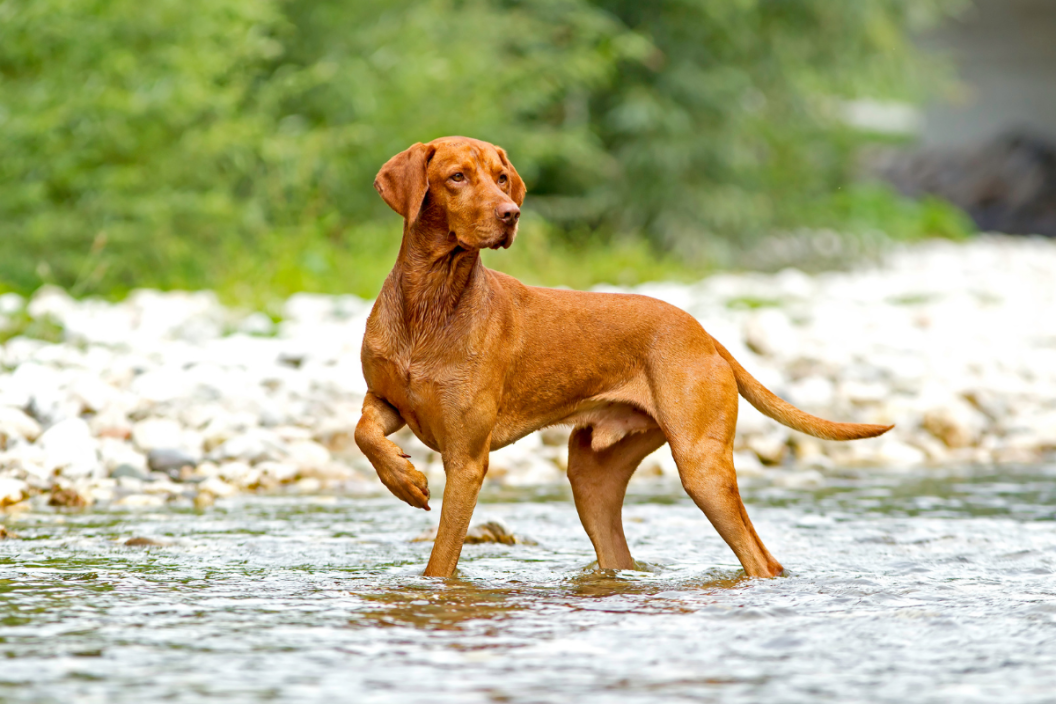
2. Dog, namely small Lhasa apso, taking leads (6)
VIZSLA : VIZ.(abbrev. for the Latin “videlicet”/namely/in other words) + 1st letters, respectively, of(…, taking leads) “small Lhasa apso”. And the Lhasa apso is another dog breed.
3. Iron nut turned on new part of cannon, say (8)
TRUNNION : Anagram of(… turned) IRON NUT placed above(on, in a down clue) N(abbrev. for “new”).
One of the projections on either side on which the barrel pivots:
.jpg)
4. Year in Provence perhaps plugged by Times Supplement (6)
ANNEXE : ANNÉE(French, as spoken in Provence, for “year”) contained in(plugged by) X(symbol for multiplication/times, as in 2 x 2).
Defn: …/addition to a document.
5. Where you might land fugitive, disheartened (6)
RUNWAY : “runaway”(a fugitive/escapee) minus its middle letter(disheartened).
Defn: … on at an airport.
7. Note Yorkshire river ending in beautiful bay (6)
LAUREL : LA(a note in the sol-fa musical scale) + URE(river in North Yorkshire, England) + last letter of(ending in) “beautiful”.
Defn: Another name for this “bay”:

8. Composer’s poor aunt chokes after starter of soup (11)
STOCKHAUSEN : Anagram of(poor) [AUNT CHOKES] placed below(after, in a down clue) 1st letter of(starter of) “soup”.
Answer: …, Karlheinz, German composer.
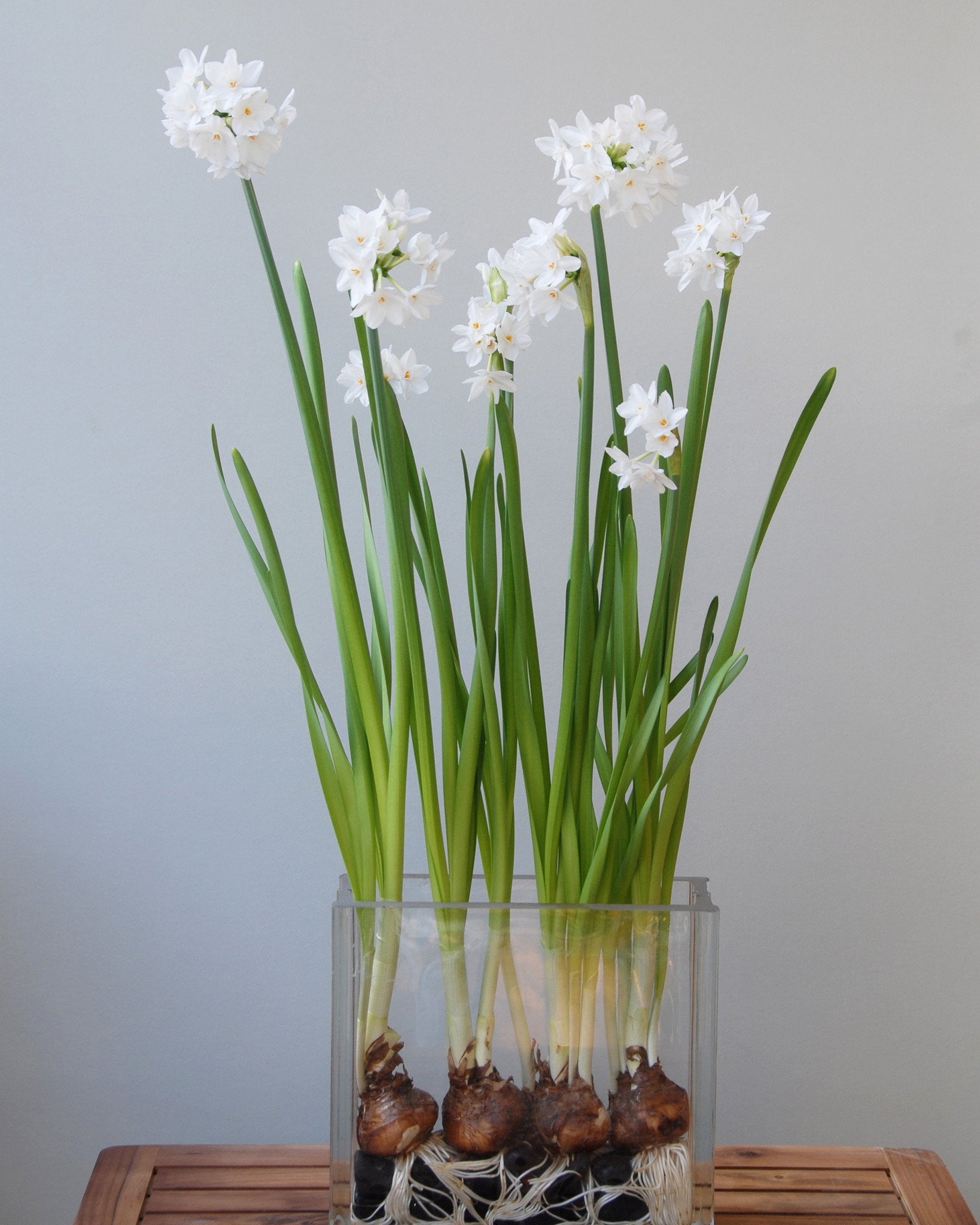
14. Bulbous growths seen in blurred iris scan (8)
NARCISSI : Anagram of(blurred) IRIS SCAN.
Defn: …/plants growing from bulbs.
15. Rake knotted hair with tool (8)
LOTHARIO : Anagram of(knotted) [HAIR plus(with) TOOL].
Defn: …/man who behaves immorally towards women.
16. Eg translating from German, and in German (6)
GERUND : GER(abbrev. for “German”) + UND(“and” in German).
Defn: In grammar, an example of which/eg is the word “translating”.
17. Fish particular spot around island (6)
PLAICE : PLACE(a particular spot/location) containing(around) I(abbrev. for “island”).
19. I’m not quite sure boy keeps address (6)
SERMON : ERM(expression of hesitation/”I’m not quite sure”) contained in(… keeps) SON(an informal form of address for a boy).
Defn: …/lecture.
20. Read up about quiet reindeer (6)
DASHER : Reversal of(… up, in a down clue) READ containing(about) SH!(an expression requesting silence/”quiet!”).
Defn: One of Santa’s …, this being the season.
I’ve found the last few quiptics to be on the harder side,this one included.Never heard of VIZSLA or TRUNNION before.Many clues seem pretty vague but that’s probably just me.Anyway thank you ScChua for the insightful blog and also to our setter Harpo.
Suitable level for a Quiptic with a few trickier clues for me such as 9ac, 22ac, 2d and finally 16d (loi).
New words for me: TRUNNION, URE river (for 7d); VIZSLA dog breed; QUE = Quebec (22ac).
I suspect it’s a pangram too, which helped with ENJOYS and VIZSLA.
Thank you to Scchua and Harpo
Never heard of VIZSLA, BRUNEL, TRUNNION. I knew er was a hesitation, but not erm. I guess if one closes one’s mouth after an er, that’s what you’d get. I haven’t seen CRANK HANDLE as one word.
Probably a little more challenging than I’d have expected for a quiptic, but mostly enjoyable. I remembered the river, though not knowing where it is.
A first quiptic in a while that I didn’t finish; if I’m not mistaken, the last one was also Harpo’s. A lot of obscure words – CRANKHANDLE, VIZSLA, LOTHARIO, TRUNNION, – far too many for a quiptic if you ask me. I liked GERUND and DROWSY. Thanks Harpo and scchua.
Thanks Scchua and Harpo.
I thought it was a good Quiptic, except for too many obscurities.
Did anyone else have envies for 9? Vie in ens. Envies seems a better (less bad?) synonym for fancies than enjoys.
Really chewy business today! I was another one defeated by the BRUNEL/TRUNNION/CRANKHANDLE combination, plus the NHO VISZLA.
On the other hand, GERUND is one for the books!
Thank you Harpo and scchua 🙂
Layman @5 implicitly raises an interesting point, whether a Quiptic is defined as such by the relative straightforwardness of the wordplay or by the limited general knowledge required in order to complete it successfully, or by both. Here, I thought, the wordplay was pretty ‘quiptic’ throughout, but it did strike me that the range of GK was more recherché than is customary. I anticipated, therefore, a flurry of NHOs in the comments. My only NHO was VIZSLA, lesser-known dog breeds being one of my black spots, but the wordplay made the answer clear.
Thanks both. I never have a problem with quiptics/beginner crosswords having a few “difficult” clues, as long as there are enough easier clues to establish a foothold, so thought the overall difficulty level throughout was fine. Less keen generally on a couple of the nho, while the anagram fodder was obvious, not being obvious spellings with all the crossers. This creates reliance on google or guess and check. I guessed two letters the wrong way round for two of these, had I guessed correctly I doubt I would be having this gripe.
(PS – re the blog for quartile 22a, not sure I would use the term “statistical data”, data is data as collected from whatever source and a statistic is a summary of data).
Might have been useful to point out it was a pangram. Thought that was part of the remit. Just saying…….
For me this was firmly in cryptic category. Normally I’ll push on and treat it as such, but didn’t have the patience for that today: my loss, perhaps.
I guess dog breeds for me are what cricket terminology or minor English towns are for others… even so, I thought VIZSLA was a bit obscure. Clued clearly enough, but the “aha!” moment is missing if you have to look things up. TRUNNION was familiar from my meccano childhood (part number 128 if my memory is correct). MESS AROUND had me struggling for names of ceramic artists before the satisfying PDM. BRUNEL put me in mind of the “surrealist engineer” in Jasper fforde’s very alternative reality: Isembard Kingdom Buñuel.
Thanks to Harpo for a nice start to the day, and sschua for the informative blog.
My first read through left me in despair. Really thought that this was way too hard for the quiptic. However, after getting a couple of clues in I got onto Harpo’s wavelength and finished it by the end of Sunday morning. Agree with others that there were a lot of obscurities but I think it was all well clued and seeing it was a pangram (thanks commenters on the Guardian for the hint) also helped. My conclusion was that this was still a quiptic if on the harder side of things. Thanks Harpo for the challenge and scchua for the detailed blog.
I have sympathy for those who have suggested that this is too hard for a quiptic. My own view is that it just about fills the remit, with the obscure words a bit annoying on a Sunday, but gettable from the clues; and all clues being fairly straightforward applications of the usual tricks (as described in the excellent ongoing Quick Cryptic series). Thanks Harpo and scchua, and a Happy New Year to you too!
Isambard Kingdom Buñuel!
I’m having that!
It was probably at the gristly end of quiptics, but, like playing a musical instrument or climbing trees, indeed like so many things in life, going a little beyond your comfort zone is the way to get better at it.
For the surface reading of the clue for GERUND: For the record, the German for e.g. is z.B. (zum Beispiel–nouns in German are always capitalized, so that’s reflected in the abbreviation too).
I am on the side that feels that this was fine for a Quiptic. For me, this was going quickly until suddenly it wasn’t; and the less-common vocabulary was all clearly clued, so you could work it out. VIZSLA, for example (erm, z.B.), was so clearly clued that it couldn’t be anything else. (Me: “There’s a dog called that? Guess so.”)
I had never heard of the composer. No one else has mentioned that, so I must have an unusual GK lacuna there.
[While we’re at it, German for i.e. is d.h. (das heißt). Oh, the things one learns in school that almost never come in handy later…]
MrP @17
Stockhausen was a very avant-garde composer. Sir Thomas Beecham, a notoriously crusty English conductor (there are lots of Beecham stories), was once asked if he had ever conducted any Stockhausen. “No” he replied “but I once trod in some….”
I thought it was fine, even if it took about as long as yesterday’s Prize. Thanks all.
Thanks sschua, for your beautifully clear and illustrated blog, as always. Happy New Year to all.
Revealed VIZSLA mainly because I was stumped by the wordplay. Missed the significance of namely, and was misdirected by taking leads thinking it was a subtraction operation. Only saw that it was a pangram on completion, not looking for one, but that would have helped with VIZSLA, being my last one in.
I’ve since done a bit of homework on Harpo and Monk, his alter ego in the Independent. From what I’ve found, Harpo often sets pangrams, and Monk often sets grids with ninas, so I’ll be on the lookout for that in future. Harpo seems Monk-lite, in that they both have ”obscure words”, but fairly clued.
mrpenney @16: small point, perhaps, but feels worth mentioning, re STOCKHAUSEN: I’ve long been familiar with him (I’m not particularly familiar with his work, more as an influence on a lot of music/bands I love) but I was fully expecting the answer to be e.g. Tchaikovsky or someone equally associated with being a ‘classical’ composer.
I didn’t have any NHOs, but the obscure words don’t help in a Quiptic. Partly I guess just not expecting them.
I did spend a very long time looking for the Scandinavian ceramicist. Even when I’d got MESS I was still trying ADOURN…
Had to reveal five and several more wouldn’t have got without the check button.
Had to reveal CRANKHANDLE as I hadn’t realised it could be one word. Of course once I knew what the answer was, the clue made perfect sense. But I don’t know if I ever would have got it.
TRUNNION was a new word for me. I played around with the anagram, googling any likely words to find the answer.
Tricky puzzle for a fairly new solver, but I got most of it in the end with a little bit of assistance.
NHO Rankin Brunel Tanked up Crank handle
Vizsla Trunnion Annexe Stockhausen Lothario. Lots to learn. Thanks Scchua
Golly. That was hard! Like others, I was unfamiliar with VIZSLA and TRUNNION but it was CRANKHANDLE that really had me stumped. Took me ages!
I didn’t get very far with this… too hard. I agree with Balfour ….. an interesting question. In the end, I was so demotivated that I gave up, which means I didn’t enjoy the puzzle. I’ve come here though, and have learnt a lot for next time, as well as some new, obscure vocabulary. Thank you especially to Scchuaa and all the comments.
Thanks Harpo for a quiptic with some push back. Vizsla, intrigued me, since we had adopted a stray that looked just like scchua’s picture when I was in my teens. Not likely to have strayed from Hungary to South India unless with Romani! Very nice blog!
Bearing in mind that it is supposedly for “those in a hurry” I’m not sure that it filled the remit as it took me almost a week to complete with a lot of thought required. In the end I was only defeated by SERMON. The wordplay was pretty straightforward for most but as others have pointed out, the vocab was not straightforward. It took me an age to dredge TRUNNION up from the depths of memory and then I had to check what it actually was. STOCKHAUSEN isn’t the first composer that springs to mind either.
So, not a Quiptic but a fun Cryptic.
Re the point raised by Balfour@8, I would take the simple wordplay side. While beginners can’t be expected to handle trickier wordplay, I don’t think we should assume that beginners possess less general knowledge than other adult solvers.
While obscure words can slow down even experienced solvers, so they might offend the “and those in a hurry” remit, it is useful for beginners to learn to focus on the wordplay as much as on the definition. 2d VIZSLA is an excellent illustration of this point.